
This story is part of the WHYY News Climate Desk, bringing you news and solutions for our changing region.
From the Poconos to the Jersey Shore to the mouth of the Delaware Bay, what do you want to know about climate change? What would you like us to cover? Get in touch.
During sunny summer afternoons, children play and revel in a splash park at the Ferko Playground in the Juniata neighborhood in North Philadelphia.
But during weeks of intense rainfall, their frolicking is disrupted by a nearby waterway that erupts with raw sewage.
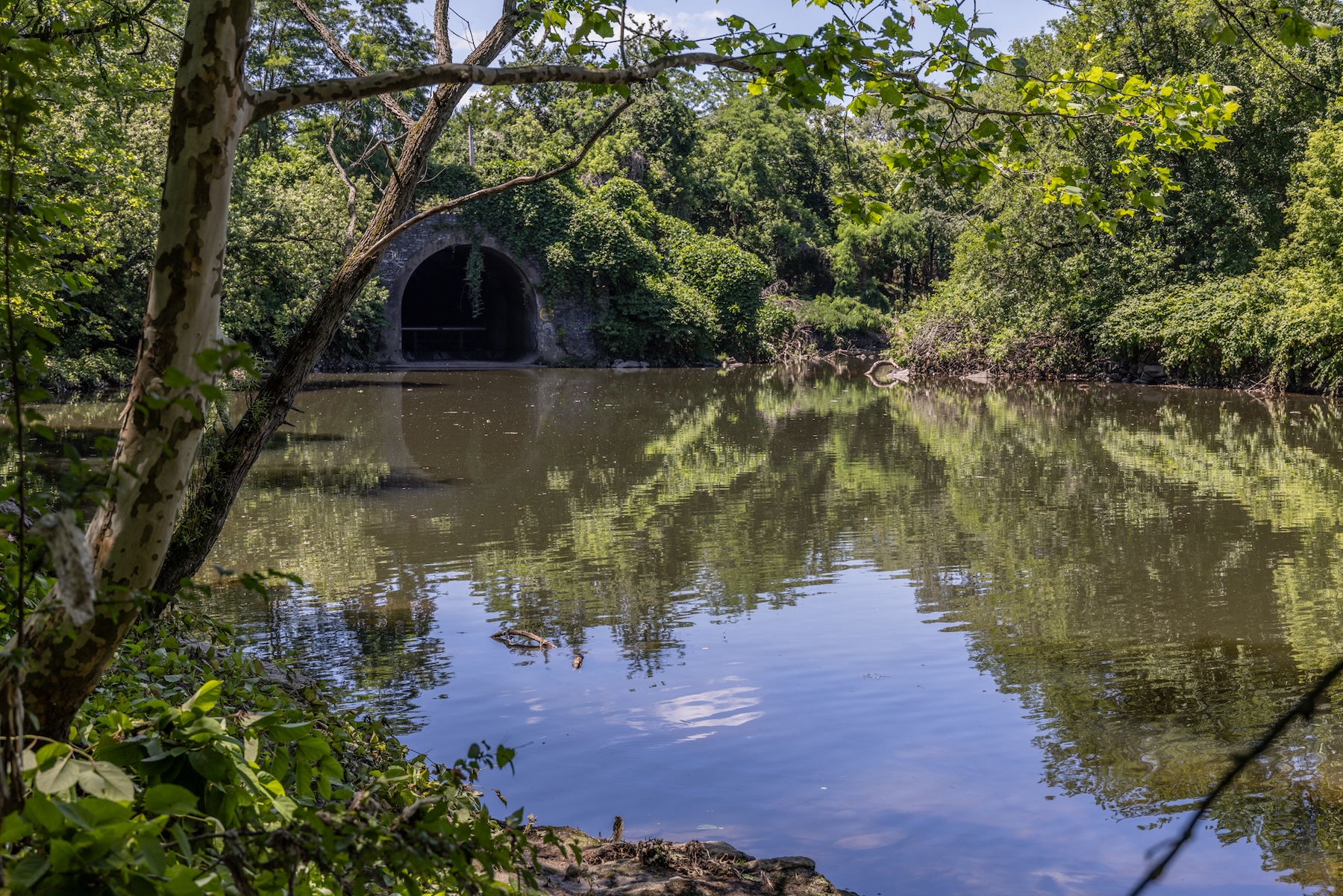
Beyond the park and rec center, a colossal 20-foot concrete hole is anchored at the tree-lined Frankford Creek.
During heavy rains, that sewer tunnel spews a torrent of dirty stormwater and raw sewage. The putrid smell permeates the air, near where children play around the corner. The idea of hiking in nature near the creek after a storm seems out of reach.
“That is a violent and powerful force, and when you have that kind of situation, it means that you can’t really have people and children safely at these sections of the creek,” said Justin DiBerardinis, executive director of the nonprofit Tookany/Tacony-Frankford Watershed Partnership.
“In 2026, in Philadelphia, it shouldn’t be that way,” he said. “We should not have sewage flowing through people’s neighborhoods.”


